
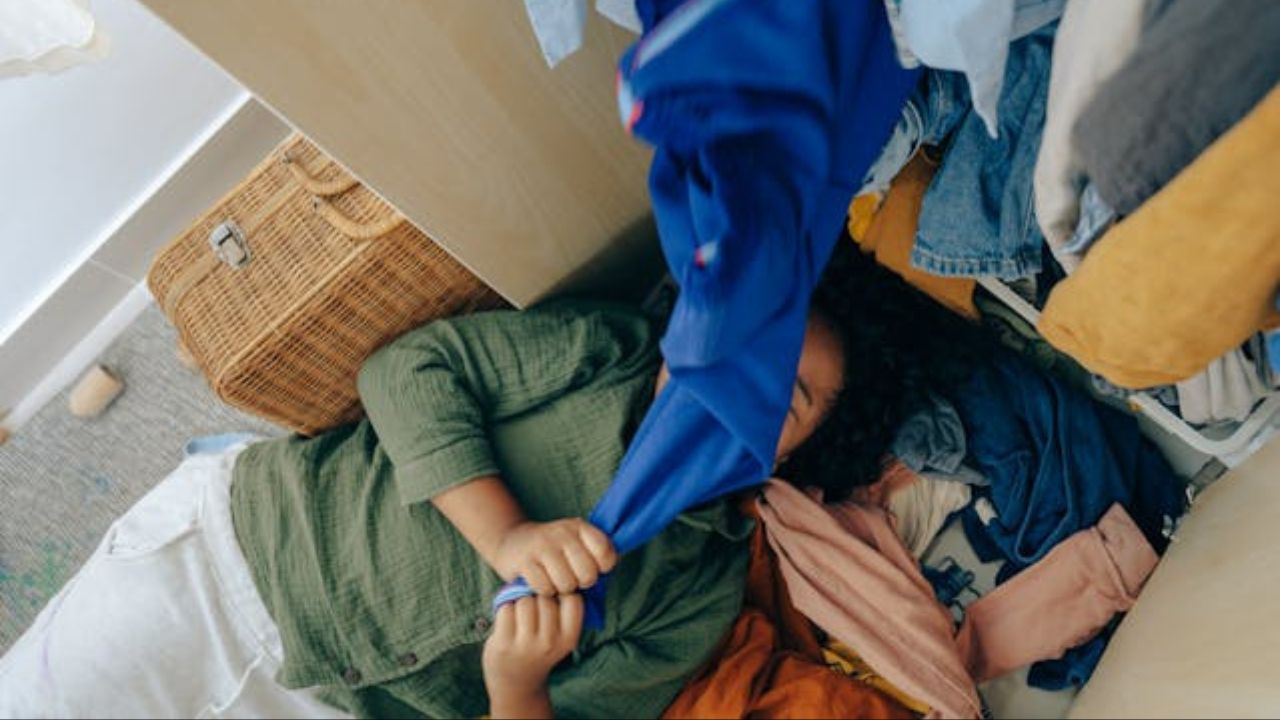
In recent years, countless organizing trends have gone viral online, promising cleaner homes, functional spaces, and stress-free routines.
However, one of them is being harshly criticized by organizing professionals and people who have tried it: “reverse decluttering.”
Although it has gained popularity on TikTok and lifestyle blogs, experts warn that this organizing method makes little practical sense — and could even make your clutter worse.
What is reverse decluttering?
The technique known as reverse decluttering proposes an approach opposite to the traditional method: instead of removing what you don’t use, you keep only what you truly want to retain. In other words, everything is removed from the space, and only what makes sense is put back — the rest is left “outside” for later evaluation.
In theory, it could help clarify what is truly essential. But in practice, it can create more confusion, temporary disorganization, and even emotional stress — especially for people who already struggle with clutter or indecision.
Why might this technique be ineffective?
Experts point out several issues with reverse decluttering. First, removing all items from a space at once can be physically and emotionally exhausting. Many people give up halfway through, leaving their homes even messier than before.
Moreover, the method requires a high level of self-awareness and focus — which isn’t always possible in a busy routine. Without a clear plan, it’s easy to end up keeping unnecessary objects — the exact opposite of what the technique intends.
Another critical point is decision anxiety. Seeing all your belongings spread out at once can overwhelm the brain, making it harder to choose. Instead of being a solution, organizing becomes a stress trigger.
What professional organizers recommend
Instead of following fleeting trends, many professional organizers suggest more consistent and proven methods, such as:
- KonMari Method (focus on what brings joy)
- Organizing by category (clothes, books, paperwork, etc.)
- 20-minute rule (a little each day)
- Progressive decluttering (slowly, without pressure)
These approaches respect individual pace and deliver longer-lasting results without the initial chaos that reverse decluttering might create.
Going viral doesn’t mean it works
Just because a technique goes viral doesn’t mean it works for everyone. Often, videos with millions of views show instant results that don’t reflect the real complexity of organizing. Reverse decluttering may seem clever and visually satisfying in short clips, but in real life, it often fails because it doesn’t consider the human factor.
Organizing a home goes far beyond aesthetics: it involves memory, emotion, routine, mental health, and well-being. That’s why organizing techniques need to be practical, sustainable, and adaptable to each person’s reality.
Conclusion: it’s best to avoid this organizing method
Although reverse decluttering has gained attention for its unusual concept, the truth is it doesn’t make sense for most people. If you’re looking to turn your home into a functional and welcoming space, it’s much better to rely on tried-and-true methods that suit your pace rather than follow viral trends that promise miraculous solutions.
This content was created with the help of AI and reviewed by the editorial team.
