
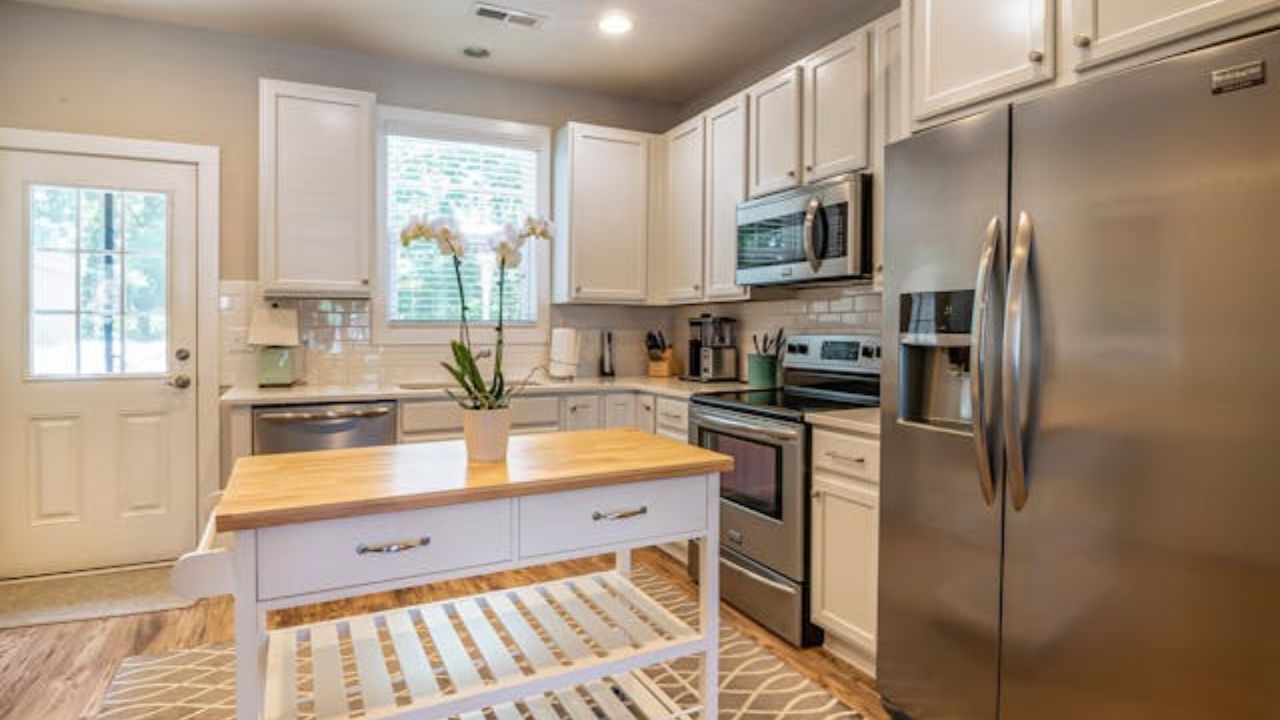
If the idea is to make the kitchen look a bit larger than it really is, some design mistakes can completely undermine that goal.
+ The design details that make Anne Hathaway’s kitchen in New York a reference of elegance
According to designers interviewed by the site Southern Living, which specializes in décor, architecture, and lifestyle, certain visual elements and functional choices end up “shrinking” the kitchen — even when the space is well planned.
The good news is that all of these issues have solutions. Understanding what to avoid is already the first step toward creating a lighter, more organized, and visually spacious kitchen.
1. Cluttered countertops
Crowded countertops make any kitchen look smaller and less functional. For Susie Prince, founder of Susie Mae Design in Atlanta, an excess of visible items creates an immediate sense of disorder. In an interview with Southern Living, she recommends storing appliances that are not used daily and organizing what remains on display on decorative trays.
When extra storage space is needed, a pantry is usually the best alternative — a solution often recommended by Stephanie Molster, founder of Stephanie Molster Interiors in Charleston.
2. Lack of windows
Whenever possible, kitchens without windows should be avoided. According to Prince, the absence of natural light makes the space feel darker, more closed in, and cramped. Natural light, according to the experts consulted by Southern Living, is one of the factors that most contributes to a sense of spaciousness in any room.
3. Excessive mixing of materials
Mixing colors, surfaces, and finishes can be interesting, but overdoing this combination often has the opposite effect. Ayten Nadeau, founder of i-TEN DESIGNS in Raleigh, explains that using many different materials visually fragments the space.
When each area of the kitchen has a different finish — upper cabinets, lower cabinets, island, and walls — the eye finds no place to rest, making the environment feel divided into several small spaces.
4. Poorly planned upper cabinets
In some situations, upper cabinets can contribute to a cramped feeling, especially in narrow kitchens. Susie Prince notes that, in these cases, open shelving is often a smarter solution. According to her, this choice “tricks” the eye, creating a sense of lightness and openness.
5. Oversized islands
Kitchen islands are highly desired, but they need to respect the proportions of the space. Esther Ellard, founder of Effortless Designs in Athens, warns that islands that are too large compromise the functional flow of the kitchen. As highlighted by Southern Living, when circulation is hindered, the space immediately feels smaller and less comfortable.
6. Cabinets that do not reach the ceiling
When upper cabinets do not extend to the ceiling, an empty strip is created that can visually reduce the height of the kitchen. Ellard recommends floor-to-ceiling cabinetry, as it directs the eye upward, increasing the sense of height while also maximizing storage.
7. Fireplace-style range hoods without proper planning
Fireplace-style range hoods are trending, but they do not work well in every kitchen. Jessica Williamson, founder of JTW Design in Richmond, explains to Southern Living that many of these models sacrifice functionality in favor of aesthetics.
When the hood extends too far over the cooktop, it can interfere with the use of pots and even pose a risk. For those who do not want to give up this style, Williamson recommends models with shallow sides and at least 30 centimeters of free space on each side of the cooktop.
8. Excessive use of standard appliances
Traditional and bulky appliances, especially stainless steel ones, can break the visual continuity of the kitchen. Laura Jenkins, founder of Laura W. Jenkins Interiors in Atlanta, notes that built-in models help maintain the harmony of the space.
According to her, interrupting the run of cabinets with many visible appliances creates a sense of visual clutter — something that makes the kitchen look smaller than it really is.
Source: Southern Living. This content was created with the help of AI and reviewed by the editorial team.
