
Putting a home up for sale almost always comes with the same desire: to impress every visitor and close the deal quickly. However, between the “for sale” sign and handing over the keys, there is a decisive factor that is entirely under your control — how the home is prepared to welcome potential buyers.
+ Celine Dion’s Christmas tree embraces white and silver and redefines the concept of elegance
“Preparing a home for sale involves buyer psychology,” explains Christina Slater, creative director at Vesta Home. “People don’t just analyze square footage or finishes; they imagine themselves living there. Preparation neutralizes the space, making it feel fresh, open, and inviting.” According to the website Real Simple, this process does not require large investments: small, strategic adjustments are enough to create impact.
Home staging experts shared affordable tips that help any property look professionally decorated without breaking the budget. See the main ones.
Make a plan to depersonalize
One of the most important — and free — steps is depersonalization. Amanda Wiss, founder of Urban Staging, says that very personal items can interfere with the buyer’s emotional connection to the space.
“Walls filled with family photos, stacks of mail, or very specific objects make the visitor see the house as yours, not as their future home,” she explains. The recommendation is to replace personal photos with neutral images, such as landscapes, and store mail in discreet baskets.
According to Wiss, the less visual clutter there is, the lighter and more welcoming the property appears to different buyer profiles. Just one caution: don’t hide everything in closets or the garage. As Kiel Wuellner, senior creative director at Vesta Home, warns, this can signal a lack of space. Donating or discarding what is no longer used is always the best solution.
Give special attention to the entryway
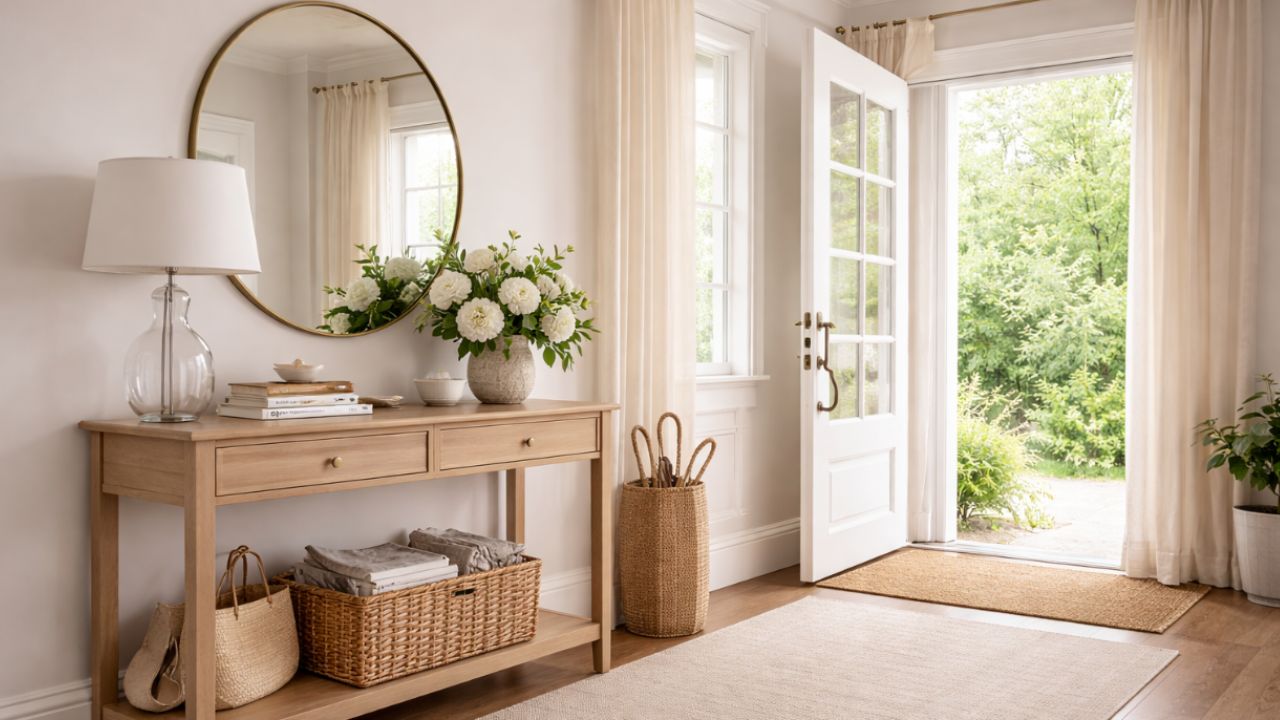
The entryway sets the first impression — and it needs to be positive. After removing shoes, bags, and accumulated items, it’s worth investing in a few well-chosen elements.
Slater highlights one simple and affordable item that makes all the difference: the mirror. “It reflects light, visually expands the space, and allows the buyer to literally see themselves living there.” Complete the look with a narrow table, a vase of flowers, and a new doormat. Small details immediately create a sense of welcome, something Real Simple points out as essential to winning over buyers in the first few seconds.
Prioritize natural and artificial light
Bright, well-lit spaces are among the most valued features by buyers. For this reason, start with the windows: keep them clean and pay attention to the placement of curtain rods.
Installing them closer to the ceiling and using long, neutral curtains that touch the floor makes the ceiling appear higher and the room more spacious. It’s also worth reviewing light fixtures. Old or outdated pieces can compromise the perception of the space.
“Lighting is like jewelry for the home,” says designer Brynn Olson. It should be the right size, have a current design, and complement the environment. Another important detail is light temperature: 2700K bulbs create warmer, more natural lighting, ideal for residential spaces.
Invest effort — not just money
Before showings, cleanliness must be impeccable. While it’s possible to hire specialized services, much can be done with personal effort: trimming the garden, washing outdoor areas, touching up baseboards, and removing worn furniture.
After that, Wiss recommends photographing all the rooms. The images help identify which spaces look small, dark, or outdated — and therefore need extra attention. If it’s not possible to hire a decorator, focus efforts on the most important areas, such as the living room, kitchen, and primary bedroom.
“Pillows, throws, books, and candles can completely transform the atmosphere,” says Wiss. When well chosen, these elements create a sense of affordable luxury, a strategy frequently highlighted by Real Simple as one of the most effective ways to increase a property’s value without exceeding the budget.
Source: Real Simple. This content was created with the help of AI and reviewed by the editorial team.
