
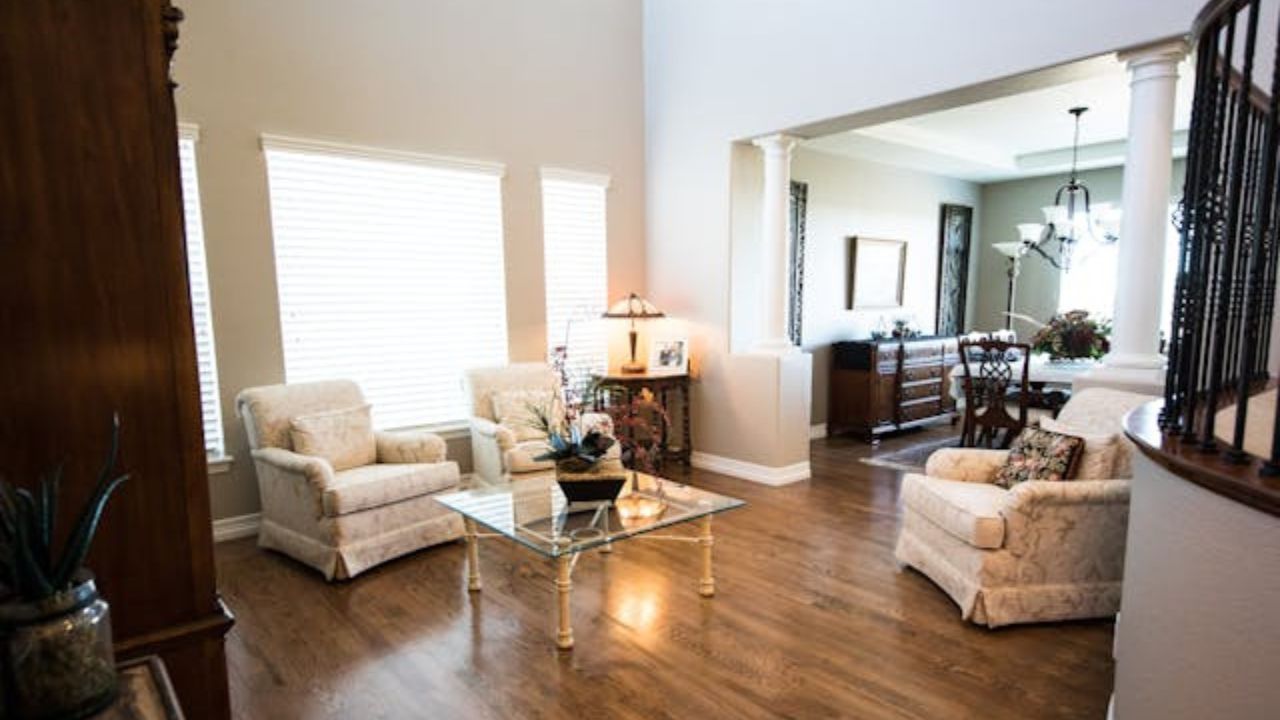
The living room is the heart of the home — but when we accumulate objects, furniture, and decor without intention, it quickly turns into a claustrophobic space that feels visually cluttered and hard to keep organized.
+ Jennifer Lopez’s Christmas wreath turns the fireplace into the new epicenter of festive décor
If you feel that your living room is no longer as welcoming as it once was, the issue may not be the size of the space, but rather the excess of items.
Below, check out 10 clear signs that your living room is too full and how to reorganize it intelligently while maintaining elegance and comfort.
1. Walking through the space requires constantly dodging furniture
If simply crossing the living room already feels like an obstacle course, this is the main sign of excess. Circulation should be fluid. If you have to “weave” between tables, ottomans, and chairs, it’s time to edit the space.
How to fix:
Remove duplicate or rarely used furniture and keep only what is essential.
2. Surfaces are always crowded
Are console tables, side tables, TV stands, and coffee tables constantly covered with objects? Then decorative items have gone too far.
How to fix:
Set a limit per surface — for example, no more than 3 objects.
3. You can’t clean without moving multiple items
If dusting becomes a complex operation involving moving picture frames, candles, books, vases, sculptures, and travel souvenirs, excess is the problem.
How to fix:
Adopt the less but better approach. Choose larger pieces with strong visual impact instead of many small ones.
4. Your shelving unit has become a catch-all storage area
When books share space with keys, containers, candles, cables, papers, and keepsakes, the shelving unit stops being decorative and turns into improvised storage.
How to fix:
Organize by category. Anything that doesn’t belong in the living room should be removed.
5. You no longer know where to place new items
If any addition — flowers, Christmas decor, a new cushion — already “overloads” the space, the visual and functional limit has been reached.
How to fix:
For every new item that comes in, an old one must go out.
6. Colors and textures don’t work together
When patterns, prints, palettes, and materials compete, the living room loses harmony and appears fuller than it actually is.
How to fix:
Stick to a base palette. Use neutral colors as a foundation and add just a few vibrant accents.
7. The walls are saturated with artwork
A gallery wall is beautiful — until it turns into an exaggerated mosaic.
How to fix:
Remove some pieces or rearrange them with more empty space.
8. You avoid inviting people over because the living room feels “chaotic”
This sign is emotional: if the living room doesn’t convey calm and comfort, something is off.
How to fix:
Do an emotional curation. Display only objects that truly have meaning.
9. The sofa is surrounded by cushions — to the point of discomfort
When you have to remove cushions just to sit down, the excess is obvious.
How to fix:
Keep only 4 to 6 cushions, balancing sizes and textures.
10. You feel like the living room never really looks clean
Visually full spaces automatically feel messy — even when they are clean.
How to fix:
Fewer exposed items = less dust buildup = a lighter look.
Your living room needs to breathe
If many of these signs show up in your daily life, the problem isn’t lack of space, but lack of editing. Giving the room visual breathing space is essential to restore sophistication, well-being, and functionality.
The ideal living room isn’t the fullest one — it’s the one that welcomes, breathes, reflects your style, and allows life to flow.
This content was created with the help of AI and reviewed by the editorial team.
