
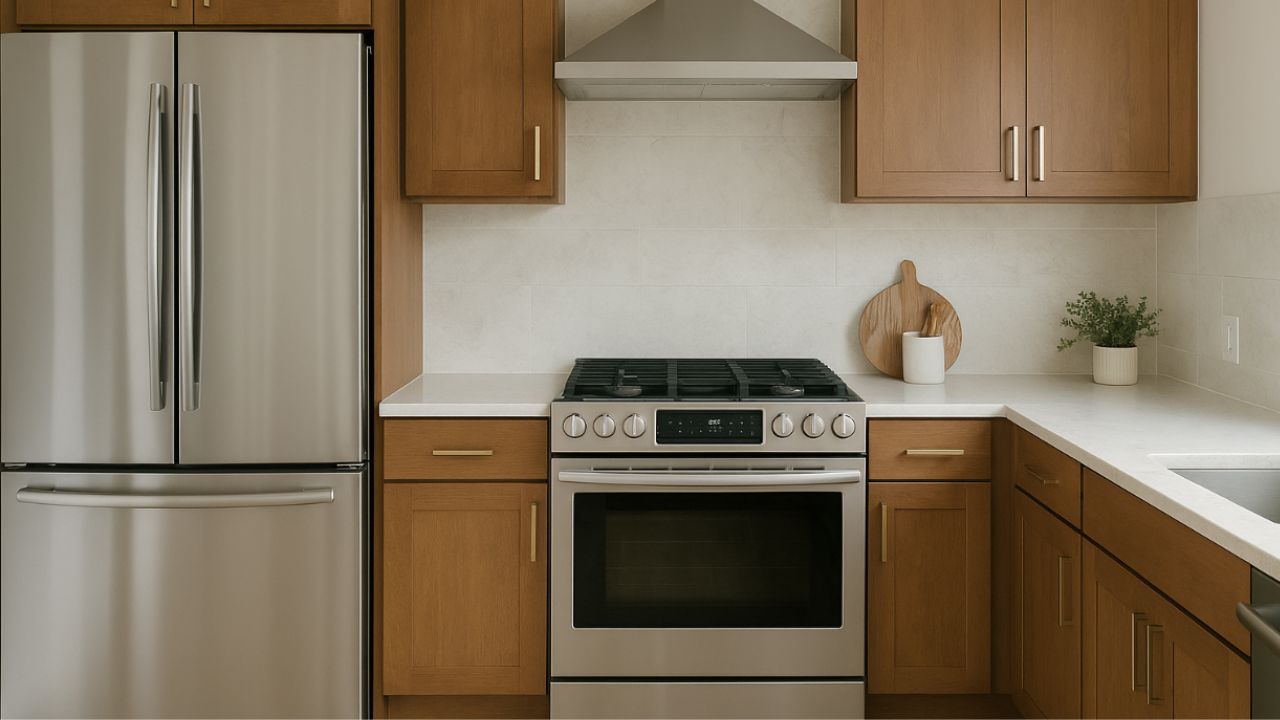
For many years, stainless steel finishes have been synonymous with modern, functional kitchens — the “professional look” that so many homeowners desired.
+ Justin Bieber’s Christmas tree is a masterclass in emotional decorating and timeless style
But over time, questions began to arise: does stainless steel still reign supreme? Or is it losing ground to new trends in materials, colors, and finishes? Let’s break down what experts are saying.
Why stainless steel still makes sense
The stainless steel finish continues to be praised for its durability, hygiene, and versatility. According to a report from Architectural Digest, stainless steel is having a “moment,” being used not only in appliances but in entire kitchens — countertops, panels, and surfaces — thanks to its blend of minimalist aesthetics and robustness.
Another article from New Home Source explains that, although stainless steel has “lost market share,” it’s far from gone: it serves as a neutral base that allows for mixing metals and finishes around it.
Homes & Gardens highlights that stainless steel kitchens or designs featuring the material heavily are being revisited by designers who love the “industrial‐chef’s machine” look — offering a clean, technical atmosphere many still admire.
These points show that stainless steel isn’t “outdated.” On the contrary, it retains strong appeal. However, that doesn’t mean it’s immune to changing tastes.
Why stainless steel may be losing its spotlight
An important shift is happening: there’s a growing demand for warmer, more textured, or colored finishes. For example, New Home Source notes that consumers are moving toward “carbon or matte” finishes that don’t highlight fingerprints the way traditional shiny stainless steel does.
There’s also a sense of saturation: some experts observe that stainless steel has become so common that it’s now standard — and the fresh approach is to look for something distinctive or more “inviting.” Homes & Gardens warns that stainless steel requires careful styling to avoid appearing “cold” or “too industrial.”
Finally, design and technology advances are opening the door to alternative materials and finishes — mixed metals, glass fronts, colored surfaces — that challenge stainless steel’s long-held dominance.
Taken together, these factors suggest stainless steel may be “losing” some of its top-tier status in trends, though it’s far from obsolete.
What designers recommend if you’re choosing or remodeling
- Evaluate your overall style: If your kitchen is ultra‐minimalist or industrial, stainless steel is an excellent choice. However, if you want a warmer atmosphere, consider pairing it with wood, warm tones, or contrasting metals.
- Opt for finishes that hide marks: Shiny stainless steel shows fingerprints and scratches. Some professionals recommend brushed or matte versions to soften this effect.
- Consider personalization: If you want something more unique, there are appliances in color, black‐stainless, or fully integrated cabinetry — stainless steel is no longer the only finish available.
- Think about longevity and resale value: Even though stainless steel still performs well, trends point toward greater variety. If you’re wondering “will I get tired of this?”, choosing something “less standard” might make sense.
- Mix in other materials: Combining wood, stone, or textile textures with stainless steel adds balance. Experts note, “metals alone can feel cold; the key lies in styling.”
No, stainless steel appliances aren’t on their way out — they’re simply entering a new phase. They remain relevant, reliable, and full of positive qualities. But the “automatic shine” of stainless steel as the default choice is being questioned. The major shift is contextual: more focus on finish, overall kitchen style, texture, material combinations, and the desire for personalization.
If you’re planning a renovation or a new kitchen, ask yourself: “Does stainless steel work in my space?” When used intentionally, it can still bring style, value, and durability. But if it’s chosen simply because it’s “the standard,” there may be alternatives better suited to contemporary design.
This content was created with the help of AI and reviewed by the editorial team.
