
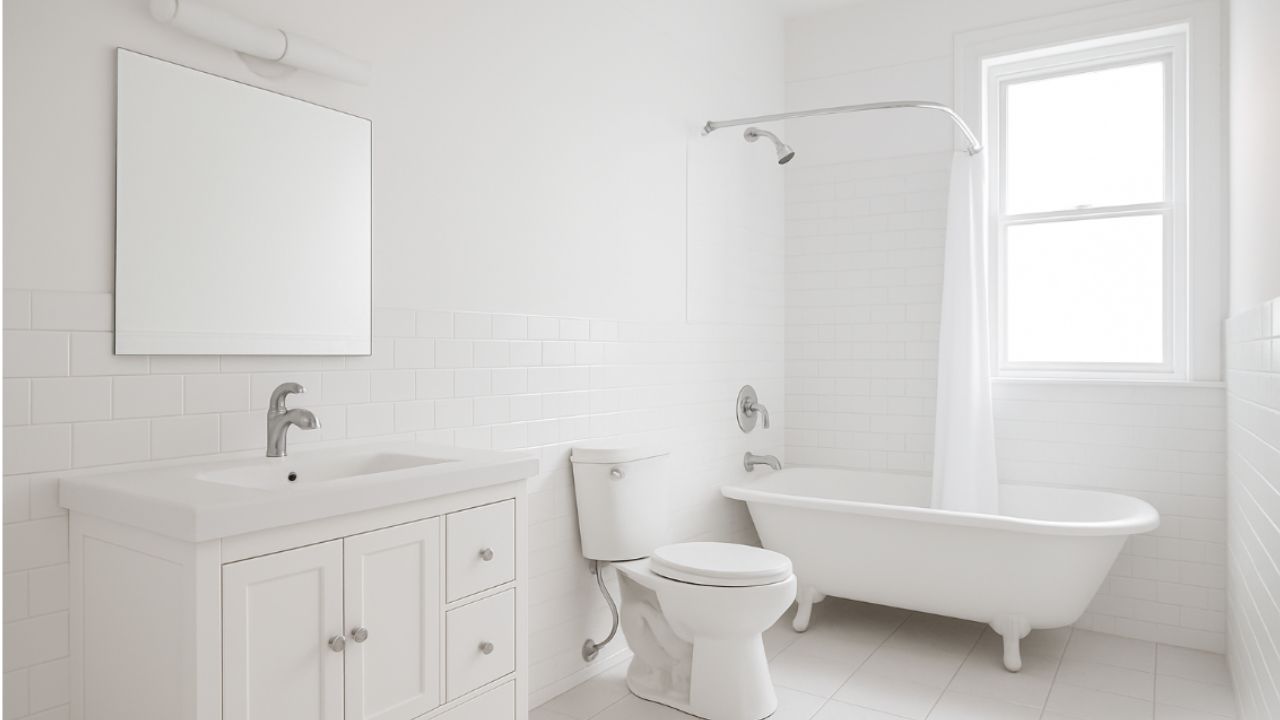
When designing a bright, airy, and visually spacious bathroom, it’s important to strike a balance between a clean-looking space and one that doesn’t feel overly stark or clinical.
+ 5 Outdated Flooring Trends You Should Ditch in 2025, According to Designers
This issue becomes even more apparent when the starting point is an all-white bathroom with no elements that add warmth or coziness to the decor.
While it may be tempting to consider a full renovation, interior design experts assure that this isn’t always necessary. In fact, it’s possible to transform the look of a white bathroom without major construction. Below are the main reasons why all-white bathrooms are not recommended and how to improve them with simple updates.
White-on-white can be too much
According to interior designer Brittny Button, the biggest issue with all-white bathrooms is the lack of color variation. For her, this kind of space is visually monotonous and can even be compared to a “dead zone.”
“All-white environments lack warm or cool tones, making them lifeless and overly clinical, like a laboratory,” Button explains.
Instead, she recommends drawing inspiration from spa-style bathrooms. Invest in decorative accessories in warm neutral tones like cream, teak, or cedar. These colors convey more comfort and create a relaxing atmosphere without the need for a full renovation.
Lighting can be a challenge in white bathrooms
Designer Julie Mays points out that making an all-white bathroom feel cozy through lighting is a real challenge.
“If there’s natural light, that helps a lot,” she says. “But in bathrooms without windows, pure white can emphasize the coldness of the space and make it feel sterile.”
In such cases, the tip is to add visual contrast with soft colors and varied textures. Mays also recommends swapping out the mirror and sconces and, whenever possible, using lightbulbs with warmer color temperatures.
Lack of coziness can affect well-being
Designer Lauren Kyle says her biggest complaint about overly white bathrooms is the feeling of missing peace and comfort.
“Spaces with little contrast make it harder to create a serene, spa-like atmosphere,” she says.
The solution is to incorporate more visual variety. In addition to soft colors and textures, Kyle suggests playing with patterns and decorative items: printed towels, artwork, and even creative accessories. “A printed rug can completely change the feel of a space,” she adds.
Lack of texture harms the bathroom’s aesthetic
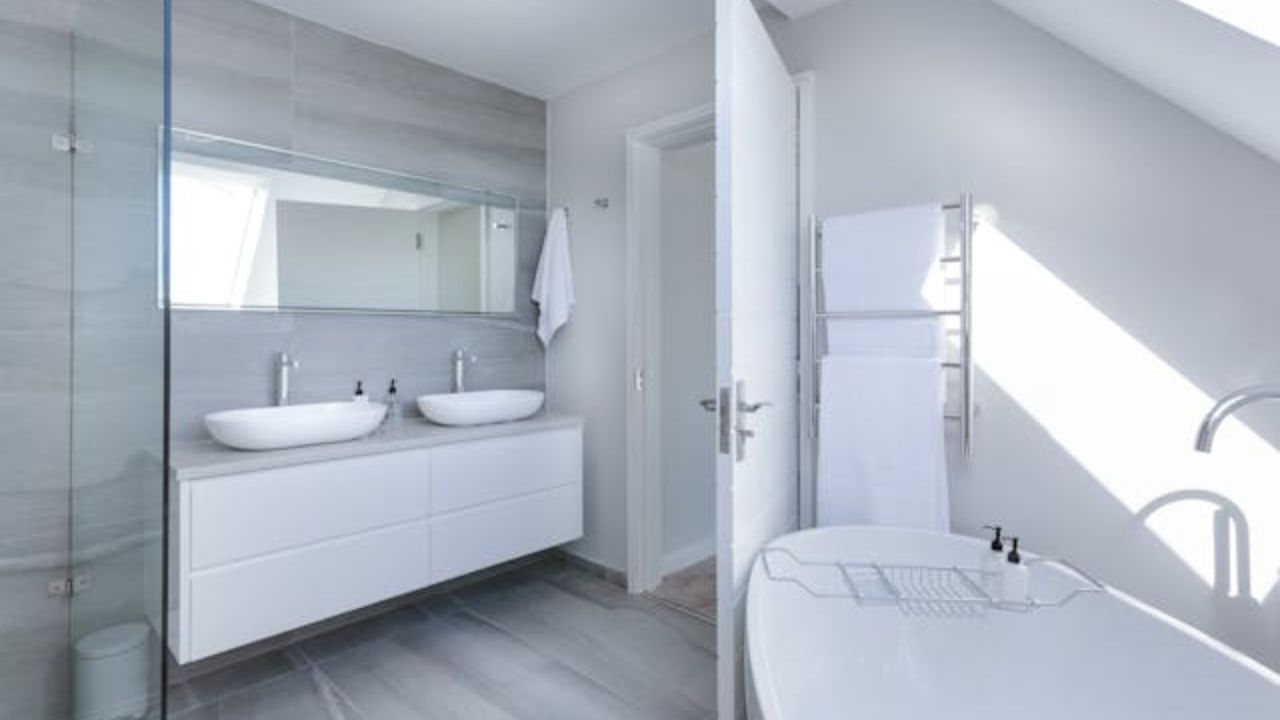
All-white bathrooms generally don’t offer tactile or visual variety. Glossy tiles and smooth fixtures don’t capture attention, making the environment feel dull.
To counter this, Button recommends adding texture through small details: cabinet handles with unique finishes, plush towels, patterned shower curtains, cozy rugs, and even art pieces.
These elements not only enrich the bathroom’s appearance but also help create a more interesting and welcoming decor.
Spaces without drama or visual impact
Another downside of an overly white bathroom is the absence of impactful elements.
Of course, replacing the tub or wall tiles requires a more extensive renovation, but Button assures that you can create visual impact with small changes: a fresh coat of paint or the addition of a rug can work wonders.
“Painting the walls or vanity in contrasting tones can completely change how the space feels,” she explains. “A well-chosen rug can also cover up white flooring and instantly add charm.”
Be careful when choosing colors to incorporate
One disadvantage of all-white bathrooms is the difficulty in pairing colors with the rest of the decor. While warm neutral tones work well, Brittny Button warns that some colors simply don’t harmonize with pure white.
“Avoid overly saturated colors like royal purple, neon yellow, or dark green. They clash with the calming atmosphere you want in a bathroom,” she says.
Julie Mays agrees and adds that highly vibrant colors like hot pink, bright orange, and neon yellow can stand out in a negative way, causing visual discomfort.
“These shades don’t match spaces designed for relaxation,” Mays says. “It’s best to choose soft, neutral colors that evoke a sense of calm and well-being.”
Source: The Spruce. This content was created with the help of AI and reviewed by the editorial team.
