
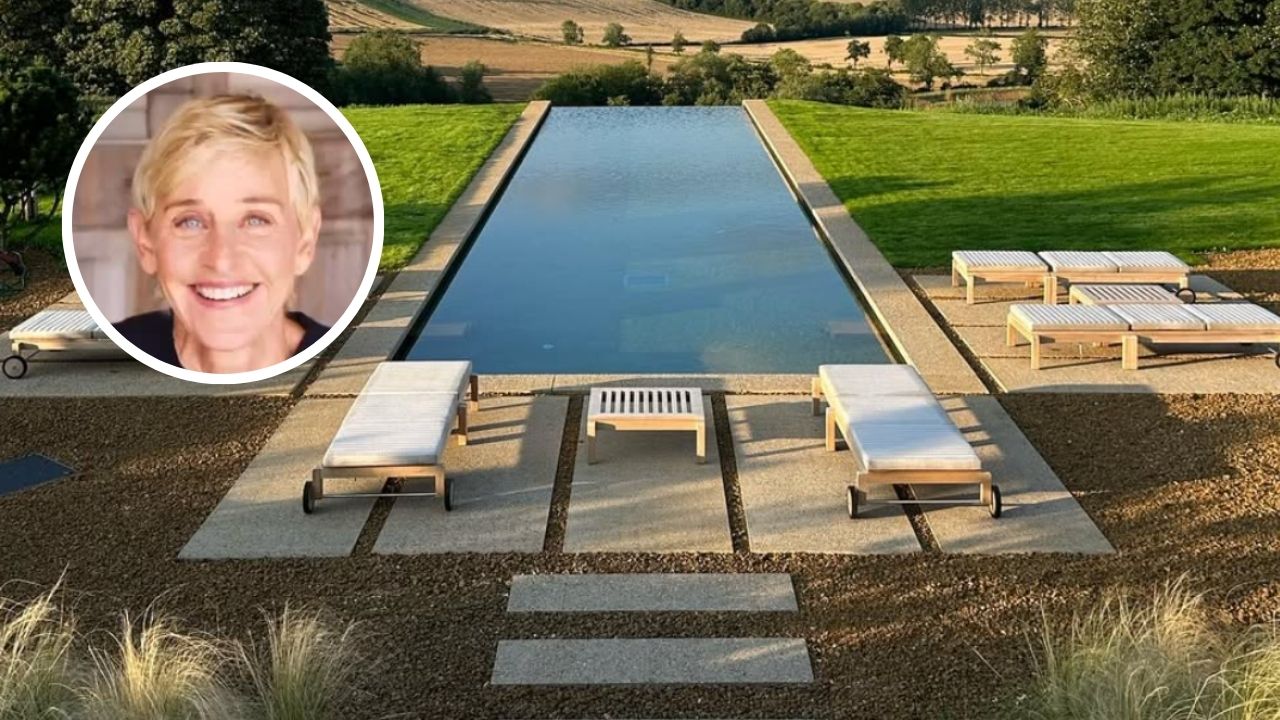
You don’t have to live in southwest England to recognize the classic aesthetic of Cotswolds gardens. In this charming region, backyards usually maintain the typical English country garden style, with climbing roses, herbaceous borders, and natural-looking lawns. However, Ellen DeGeneres chooses a very different path.
+ Kirsten Dunst’s Vintage Lamp Becomes a Thrift Store Obsession
Ellen DeGeneres and her wife, Portia de Rossi, live in a stunning architectural property called Hiaven, which completely breaks away from traditional expectations of English garden design. The residence, with its ultra-minimalist lines, combines rustic and industrial elements that could easily be located in Los Angeles — and naturally, the landscaping follows this same concept.
Unlike a traditional cottage garden, the modern garden surrounding the pool area is marked by smooth lines and towering pine trees, creating an atmosphere reminiscent of a luxury resort. The space is unique and has caught the attention of gardening experts who appreciate its zen and contemplative essence.
“Ellen DeGeneres’ garden is unlike anything you’ll find in the Cotswolds: a serene and almost meditative environment that balances bold sculptural forms with understated elegance,” explains Thom Rutter, master gardener and editor of Homes & Gardens magazine.
One of the most striking elements of Ellen DeGeneres’ landscape is the creative use of pine trees, which, according to Thom, act as “living works of art” when given room to stand out individually.
“Instead of overloading the branches with competing plants, there’s intentional spacing that allows each tree to maintain a position of quiet authority, creating a minimalist and visually impactful composition,” the expert comments.
Another highlight of the garden is the ornamental grasses, which elevate the landscaping concept with their natural beauty and light texture.
“A refined palette of ornamental grasses, like the ethereal plumes of Stipa or the soft curves of Carex, intensifies the feeling of tranquility. They offer year-round beauty and enrich the sensory experience of the space,” notes Thom.
“The result is a landscape that feels more like a sanctuary than a conventional garden — thoughtfully designed, naturally peaceful, and absolutely unique in its zen aesthetic.”
Source: Homes & Gardens. This content was created with the help of AI and reviewed by the editorial team.
Stay updated through our Facebook page.
Ver essa foto no Instagram
