
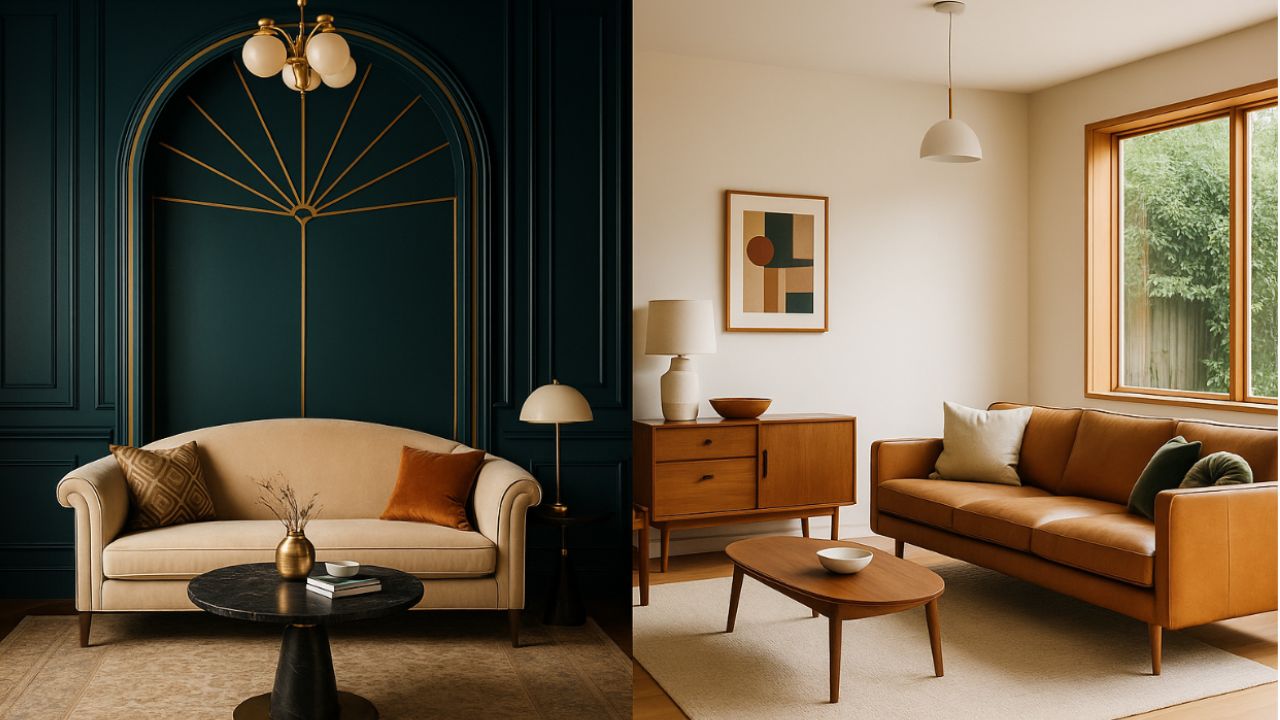
When it comes to iconic design styles, two names often come up: Art Deco and Mid-Century Modern. While both are striking and timeless, each has unique characteristics that influenced architecture, furniture, and interior design in distinct ways.
If you want to understand the difference between Art Deco and Mid-Century Modern design, keep reading to discover the main features of each style.
+ Cluttercore: the maximalist décor trend that embraces excess — but with charm and intention
What is Art Deco?
Art Deco emerged in the early 20th century, especially between the 1920s and 1930s. This design style is characterized by opulence, the use of luxurious materials, and bold geometric shapes. Inspired by technological progress and the glamour of the era, Art Deco incorporated elements from ancient cultures—like Egypt and Greece—bringing an aesthetic that symbolized progress and sophistication.
Main characteristics of Art Deco:
- Geometric and symmetrical lines: Triangles, zigzags, and stylized shapes are typical.
- Luxurious materials: Marble, mirrors, stainless steel, hardwood, and lacquer are widely used.
- Sophisticated color palette: Metallic tones like gold and silver, combined with black, white, and rich colors like emerald or ruby.
- Striking decorative elements: Use of ornaments, repetitive patterns, and glossy finishes.
- Architectural influence: Grand facades like the Chrysler Building in New York.
Art Deco represents elegance, exuberance, and modernity for its time and remains one of the most popular choices for those seeking a sophisticated and glamorous environment.
What is Mid-Century Modern?
Mid-Century Modern emerged between the 1940s and 1960s as a response to the decorative excess of earlier styles, including Art Deco. This movement focused on simplification, functionality, and integration with nature, profoundly influencing 20th-century interior design and architecture.
Main characteristics of Mid-Century Modern:
- Clean, minimalist lines: Simple, organic, functional shapes without unnecessary ornamentation.
- Innovative materials: Use of natural wood, steel, molded plastic, and glass, often combined in a single piece of furniture.
- Integration with the environment: Large windows, open spaces, and a focus on bringing nature indoors.
- Soft colors and balanced contrasts: Neutral palettes like beige and white mixed with vibrant tones like mustard, olive green, and turquoise blue.
- Iconic furniture: Pieces by designers like Charles and Ray Eames, Eero Saarinen, and Arne Jacobsen became symbols of the style.
Mid-Century Modern values comfort, functionality, and unpretentious aesthetics, making it ideal for those seeking a cozy, timeless, and practical space.
What is the difference between Art Deco and Mid-Century Modern?
The main difference between Art Deco and Mid-Century Modern lies in their aesthetic and functional approach. While Art Deco celebrates luxury, ornamentation, and opulence, Mid-Century Modern prioritizes simplicity, functionality, and a connection with nature.
Comparing the two styles:
Art Deco and Mid-Century Modern are two iconic design styles, each with well-defined characteristics that reflect the era and cultural values in which they emerged.
Art Deco originated in the 1920s and 1930s. Its aesthetics are marked by ornamental and luxurious elements, with geometric and symmetrical shapes that convey sophistication and elegance. Typical materials include marble, metal, and lacquer, while the color palette features metallic and vibrant tones that reinforce the lavish feel of its compositions.
Mid-Century Modern, on the other hand, emerged between the 1940s and 1960s, offering an opposing aesthetic: minimalist and functional. Its shapes are more organic, with clean lines that emphasize simplicity and practicality. Common materials include wood, glass, and plastic, creating warm and straightforward interiors. The color palette is mostly neutral but often includes vibrant accents to add personality.
So, while Art Deco values luxury and ornamentation, Mid-Century Modern embraces functionality and a stripped-down design—both leaving important marks on the history of interior design.
Both styles are timeless and can be blended in a balanced way, but it’s essential to understand their differences when deciding which one to adopt for your home’s décor or design project.
How to choose between Art Deco and Mid-Century Modern?
If you want a sophisticated, glamorous, and bold space, Art Deco may be the ideal choice. If you prefer a cleaner, functional, and cozier space, Mid-Century Modern is the perfect fit.
In fact, many interior design professionals today mix these styles, creating compositions that balance the luxury of Art Deco with modern simplicity, resulting in unique and contemporary environments.
Understanding the difference between Art Deco and Mid-Century Modern is essential for anyone looking to create authentic decoration projects aligned with their personality. Both styles have left a powerful legacy in the world of design, influencing generations and remaining relevant to this day.
Now that you know the main features of each, which style do you think best suits your taste—and how will you transform your space?
Source: Livingetc
This content was created with the help of AI and reviewed by the editorial team.
