
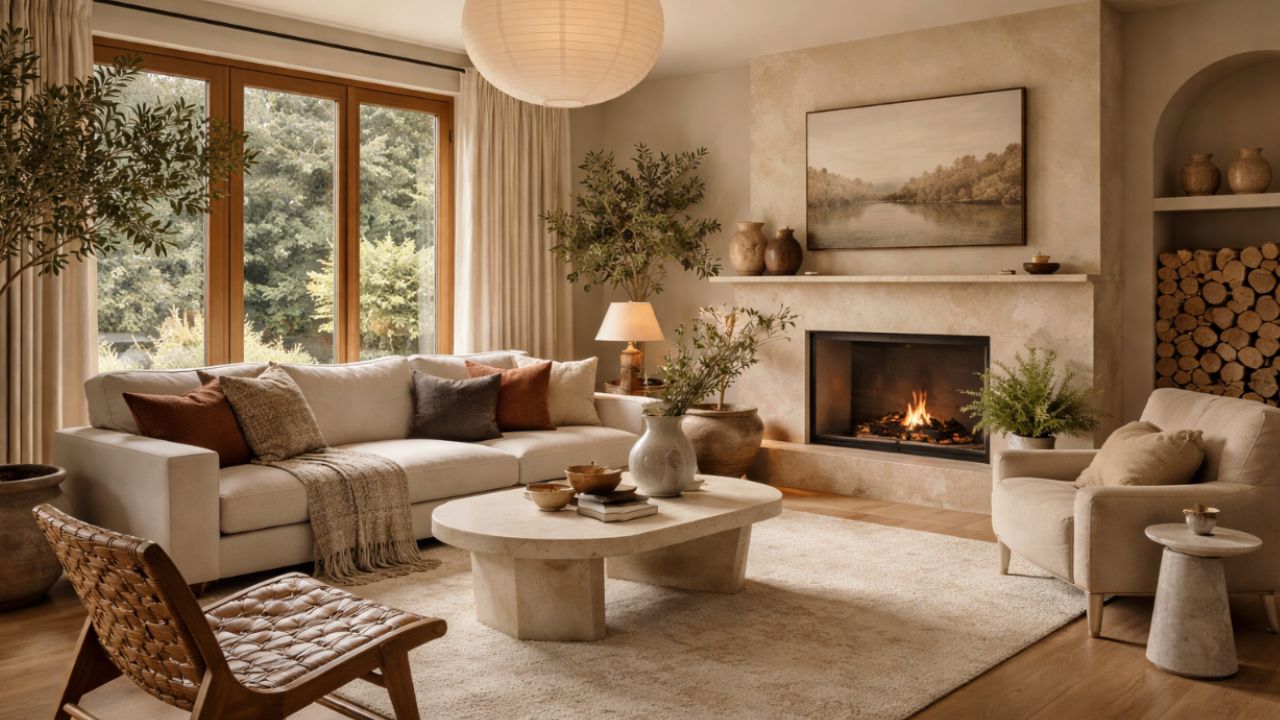
Every beginning of the year brings that almost instinctive desire to start over. As an interior designer, I can say: 2026 arrives with a clear shift in mindset.
+ These are the decor trends you’ll see everywhere in 2026
2026 is no longer about following fleeting trends or copying perfect catalog interiors, but about creating homes that make sense in real life — more human, more conscious and, above all, more durable.
These are the decorating resolutions that many interior designers (myself included) are adopting for 2026.
1. Fewer trends, more identity
The first major resolution is simple but transformative: stop decorating to please algorithms and start decorating for people. In 2026, the home stops being a reflection of what is trending and begins to tell the story of those who live there.
This means mixing old pieces with new furniture, keeping sentimental objects even if they do not perfectly “match,” and accepting that a home with personality is always more interesting than an impeccable but generic space.
2. Invest in fewer pieces — but better ones
More conscious consumption has stopped being just talk and has become practice. Instead of replacing everything every season, the resolution for 2026 is to invest in well-made, timeless pieces with reliable origins.
A good sofa, a solid dining table, a thoughtfully designed light fixture are worth more than several disposable items. The home gains in quality, comfort and longevity — and the look remains elegant for much longer.
3. Prioritize real comfort, not just appearance
If there is one thing recent years have made clear, it is that the home needs to truly work. In 2026, designers are placing physical and emotional comfort at the center of decisions.
Pleasant-to-the-touch fabrics, deep seating, welcoming lighting and layouts that facilitate circulation become priorities. Aesthetics remain important, but never again at the expense of well-being.
4. Use color in a more emotional and less predictable way
Neutral palettes remain relevant, but gain new layers. Instead of generic beige, tones with emotional depth take the stage: soft terracotta, moss green, grayish blue, warm brown and nature-inspired nuances.
The resolution for 2026 is to use color as a tool for feeling — not as a trend. Each space calls for a specific atmosphere, and colors are chosen with greater intention.
5. Bring more nature indoors
Biophilia stops being a concept and becomes a habit. Plants, natural materials, wood in a more raw state, stone, fibers and organic fabrics take up even more space.
It is not about turning the home into a greenhouse, but about creating subtle connections with the natural world. In 2026, the presence of nature indoors is seen as an essential part of comfort and emotional balance.
6. Treat lighting as a project — not a detail
One of the biggest resolutions designers are making for 2026 is to stop treating lighting as a secondary element. Light is atmosphere, mood and functionality.
Layers of lighting, warm lights, indirect points and well-positioned fixtures replace generic solutions. The home begins to have different “moods” throughout the day, following the routine of those who live there.
7. Create homes that age well
Perhaps this is the most important resolution of all. In 2026, the goal is not to create spaces that impress today, but environments that remain beautiful, comfortable and relevant five, ten or fifteen years from now.
This involves more conscious choices, less excess, more balance and an attentive eye on time. Homes that age well are those that move with life — not fight against it.
This content was created with the help of AI and reviewed by the editorial team.
